
How to Tell the Difference Between Ear Pressure and Ear Infections
If you live in Alexandria, planes heading into Reagan National are a
By: admin | February 20, 2026
It’s just information about how your body is working right now. The chart your specialist shows you might look a little technical at first glance, with its lines and symbols, but it’s actually a pretty straightforward snapshot of what sounds you’re hearing clearly and which ones are harder to pick up.
Think of it as a personalized map of your hearing, not a pass or fail grade. Once you know what you’re looking at, those squiggly lines start to make sense and tell you something useful about your everyday life.
Here’s why this matters: when you understand what your hearing test shows, you can make better choices about how to handle conversations at work, social gatherings or even just watching TV at home.
Maybe you’ll realize why you keep asking people to repeat themselves in noisy restaurants, or why phone calls feel more exhausting than they used to.
Your results give you real, practical information that helps explain what’s been happening and what you might want to do about it. We’re not talking about fixing anything just yet.
Right now, we’re simply looking at what the numbers and charts tell you so you can move forward with a clear picture of where things stand.
Your ears are doing a lot more work than you might think.
When someone talks to you or music plays, those sounds travel through the air as vibrations. Your outer ear catches these vibrations and funnels them down your ear canal to the eardrum, which is basically a thin piece of tissue that vibrates when sound waves hit it.
From there, three tiny bones in your middle ear (the smallest bones in your entire body, actually) pick up those vibrations and amplify them before passing them along to the inner ear. Each part handles a specific job in moving sound from the outside world to your brain.
The real work happens in your inner ear, in a snail-shaped structure called the cochlea. Inside the cochlea, thousands of tiny hair cells convert those vibrations into electrical signals that your brain can understand.
Different hair cells respond to different pitches, which is why you can tell the difference between a high note and a low note, or between someone’s voice and background noise. Once these hair cells do their job, the signals travel up your auditory nerve to your brain, where they get translated into recognizable sounds like words, laughter or music.
When any part of this system runs into trouble, whether it’s a blockage in your ear canal, damage to those tiny bones or worn-out hair cells, that’s when hearing loss can happen.
Most people don’t wake up one day and realize they can’t hear. Instead, you start making small adjustments without thinking about it. You position yourself closer to whoever’s talking. You watch people’s lips more than you used to. You fill in the gaps when you miss a word here and there.
These workarounds become so automatic that you might not realize how much effort you’re putting into something that used to be effortless. Sometimes a friend or family member points it out before you do.
Here are some of the most common symptoms people experience:
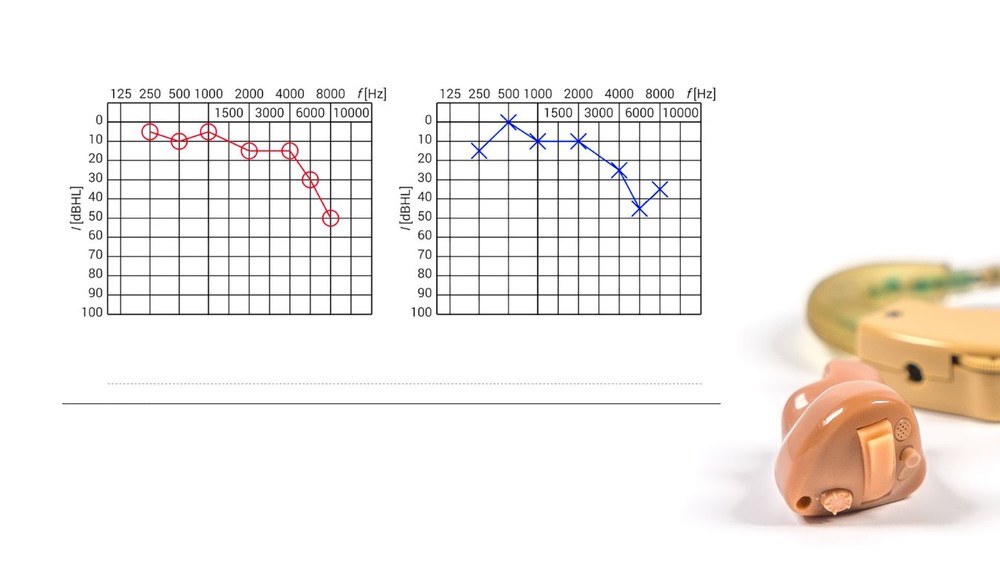
When your audiologist hands you your hearing test results, you’re looking at what’s called an audiogram. It might remind you of a graph from a science class, with lines and dots plotted across it.
But once you know what you’re looking at, it’s actually a pretty clear visual of how well you hear different sounds. Each element on the chart serves a specific purpose, showing where your hearing is strong and where it needs some help:
The chart works like any graph you’ve seen before, with two axes that measure different things. Along the top, you’ll see frequencies measured in Hertz, which basically means how high or how low a sound is.
Low frequencies on the left side are things like a dog barking or thunder rumbling. High frequencies on the right are sounds like a phone ringing or birds singing. The vertical line on the left side shows decibels (dB), which measure how loud or soft a sound is.
The softer sounds sit at the top, and as you move down the chart, the sounds get louder. Where your hearing gets marked on this grid tells you which pitches you hear well and which ones you’re struggling with.
Your audiogram uses different symbols to keep your ears separate, since it’s common for people to have different hearing in each ear.
Typically, circles represent your right ear and X marks represent your left ear, though sometimes the symbols vary slightly depending on the testing equipment. You might also see these marked in different colors, like red for right and blue for left.
This distinction matters because knowing which ear has more hearing loss helps your specialist recommend the right solution, whether that’s hearing aids for both ears or just one.
Most audiograms include shaded areas or lines that show you where normal hearing ends and hearing loss begins. These zones give you context for your results without getting lost in the numbers:
If your hearing test shows hearing loss, the first thing to know is that you have options. Hearing aids are the most common and effective treatment for most types of hearing loss.
Today’s hearing aids come in all shapes, sizes and technology levels, from tiny models that sit completely inside your ear canal to sleek behind-the-ear styles with Bluetooth connectivity. The variety exists because everyone’s hearing loss is different, and everyone’s life is different too.
Your audiologist will recommend specific hearing aids based on three main factors: your hearing test results, your daily activities and lifestyle, and your budget.
If you spend a lot of time in meetings or noisy environments, they might suggest models with advanced noise reduction features. If you’re on the phone all day for work, Bluetooth connectivity might be worth the investment. If you want something low maintenance, rechargeable options mean you won’t be fumbling with tiny batteries.
Once you choose a style and model, your audiologist will fit them to your ears and program them specifically for your hearing loss based on your audiogram.
Looking at your hearing test results can bring up a lot of questions, especially if this is your first time seeing an audiogram. Your specialist expects this. They’d rather you ask now and leave with a clear understanding than walk out confused about what your results actually mean. This is your hearing we’re talking about, so don’t hesitate to speak up if something doesn’t make sense or if you want more details about what happens next.
Here are some helpful questions to consider asking:
Your audiologist has seen hundreds of audiograms and knows how to translate those lines and dots into practical advice. The more specific you can be about what you’re experiencing in real life, the better they can connect your test results to solutions that actually help.
Your audiogram gives you the facts about your hearing. Once you know how to read it, you can see exactly which sounds you’re missing and why certain situations have been harder than others.
You’ll also understand why they program hearing aids a certain way for you or recommend specific features based on your results. It’s not complicated once someone walks you through it.
If you would like help understanding your own hearing test results or have questions about your chart, the team at Alexandria Hearing Studio is available to support you. You can reach our Alexandria, VA at (571) 341-7780 for more information or to schedule a visit.
Our team will work with you to explain your results and discuss options for improving your listening experience.
Tags: audiogram, hearing test results

If you live in Alexandria, planes heading into Reagan National are a
By: admin | September 21, 2026

Alexandria is not a sit-still kind of place. Between the waterfront, the
By: admin | April 22, 2026
It’s just information about how your body is working right now. The
By: admin | February 20, 2026